Welcome to UBIYA DERMA
By Rajendra Koirala, BSc (Chemistry), MBA — Founder & Managing Director, Ubiya Derma; Cosmeceutical Formulation & Product Development Specialist; Author, Ubiya Derma Skincare Blog.
There is no honest answer to “Is skincare better than a procedure?” until you name the problem and the result you want. Daily sunscreen and moisturizer have roles that differ from a clinician’s procedure. A cosmetic cream cannot be assumed to match a laser, injection or peel, and a procedure does not make ordinary sun protection unnecessary. Compare the same concern, population, outcome and time period before using the word better. [1] [2]
If you are deciding how to spend money in Nepal, write one sentence first: “I want to improve ___, and I would recognize progress by ___.” That sentence is more useful than a product page promising “clinic-like results” or a social post showing one dramatic photograph. It also helps a dermatologist explain what is realistic for your skin.
“Better skin” is too broad to evaluate. Dryness after washing, uneven-looking tone, a deep wrinkle, a scar and a suspicious spot are different questions. The American Academy of Dermatology (AAD) advises buyers to focus on a primary concern and have realistic expectations of products. It notes that creams cannot deliver the results of a facelift. [1]
Divide the question into two columns. In the first, write changes you can observe at home: comfort after cleansing, a manageable routine or consistent sun protection. In the second, write outcomes needing professional assessment: a diagnosed condition, a specific scar or whether a procedure addresses a structural feature. The columns do not rank one approach above another. They show why a broad comparison misses the point.
A Nepal shopper may have bought several brightening products yet still be uncertain what kind of dark mark they have. A new, changing or unexplained mark calls for clinical assessment before anyone recommends a cosmetic or procedure. A sales photograph cannot diagnose it.
Before accepting “better than a procedure,” ask seven questions:
Concern: Is the study about the exact problem named in the claim?
Comparator: Which specific procedure or product was the alternative? “Professional treatment” is not a scientific comparator.
People: Were participants similar to the intended audience in starting concern and relevant characteristics?
Outcome: Was improvement assessed by participants, photographs, a clinician or an instrument? Were methods consistent?
Time: How long did treatment and follow-up last? Was any effect measured after it stopped?
Safety and effort: What adverse effects, downtime, daily work and repeat visits were reported?
Product match: Was the actual retail formula tested, or only an ingredient or another company’s preparation?
Without a direct comparable study, a brand should not state that its cream outperforms a named procedure. A review of skin-aging interventions discusses limitations including small samples, short follow-up and variable outcomes. It offers reasons to inspect studies carefully, not proof for or against a particular Ubiya product. [3]
The same caution applies to procedure advertising. A procedure can be overpromised when risks, the number of sessions or recovery are left out. The AAD recommends a consultation and questions about qualifications, expected results, complications, preparation and aftercare. [2]
The AAD describes sunscreen and moisturizer as useful foundations in an appearance-focused routine. Consistent sun protection matters even when someone has a procedure for signs of sun damage. That is a reason to build a sustainable routine, not a claim that any sunscreen performs a procedure’s job. [1] [4]
A procedure is selected for an assessed concern and can involve risk, recovery and individual differences in response. A qualified clinician should explain it. Skincare before or afterward may be discussed, but a general article cannot set a personalized regimen. A review of periprocedural skincare found that few studies directly compared a specific routine with no skincare, which limits sweeping claims about an exact regimen. [5]
A routine and a procedure can be related without being substitutes. When a procedure is involved, follow the treating clinician’s instructions about what to use and when. Do not start or stop a prescription or active cosmetic based on a general blog.
Take your current product list and package photographs to the consultation. Explain the one concern you want assessed. Ask: What is this finding? What are the realistic options, including doing nothing now? What result could each option achieve, and how will we judge it? What are the risks for my skin tone and history? How much recovery, follow-up and total cost should I plan for? Which of my current products should I continue or pause under your instructions? [2]
For a product claim, ask the brand a parallel question: What finished-product evidence supports this stated cosmetic outcome? A study of a different percentage, delivery system or brand is useful context but does not validate the item in your cart. Keep a dated screenshot of the exact listing; online product pages can change.
Absolute phrases such as “removes pigmentation,” “erases wrinkles,” “replaces lasers” or “no risk” hide the comparator and individual variation that a good decision needs. Ask for the measure and the limitations instead.
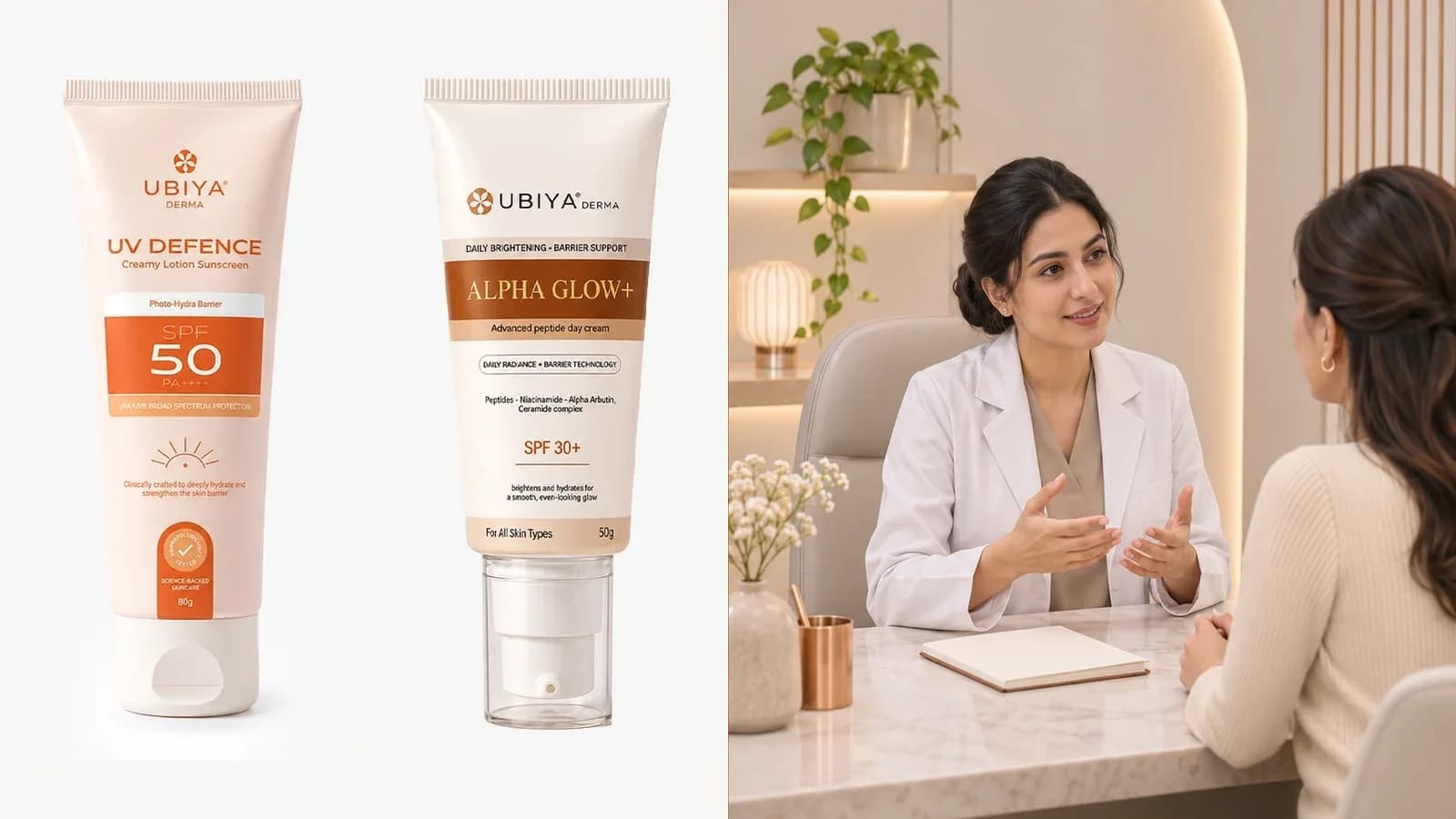
The current Ubiya shop lists Alpha Glow+ Day Cream and UV Defence Creamy Lotion Sunscreen for daily care. These links identify official product pages; they do not imply a head-to-head comparison with a dermatology procedure. Read current packages and directions, and discuss medically managed concerns with a qualified clinician.
This article makes no claim that a Ubiya product reverses scars, treats a disease or equals an injection, peel or laser. No verified finished-product head-to-head trial was available for this draft. A premium brand can help readers by showing exactly where its evidence ends.
No such conclusion follows from the evidence cited here. Procedures address different assessed concerns, and a cream’s finished formula must be evaluated for its own claims. [1] [2]
Do not infer that. The treating clinician should give individualized instructions; sun protection remains a core topic in the AAD’s advice about sun-damaged skin. [4]
Not alone. Ask about the comparator, lighting, timing, other care, outcome and whether the image represents a controlled study of the exact intervention.
A qualified clinician can assess a new, changing or otherwise concerning finding and explain appropriate options. This article cannot diagnose it.
Begin with the concern and a measurable, realistic aim. Use daily care for its genuine daily jobs; use a qualified consultation for diagnosis or a procedure decision. If anyone claims one option is “better,” ask for a direct, fair comparison of the outcome that matters to you.
AAD: Best questions to ask when considering a cosmetic treatment.
Topical and systemic skin aging interventions: Evidence, pitfalls and perspectives, 2026.
Concomitant Use of Dermo-Cosmetic Skin Care in Aesthetic Procedures, 2026.
About the author: Rajendra Koirala brings 20 years of pharmaceutical industry experience to Ubiya Derma’s product development. He writes practical, research-informed skincare articles for readers in Nepal.