
Welcome to UBIYA DERMA
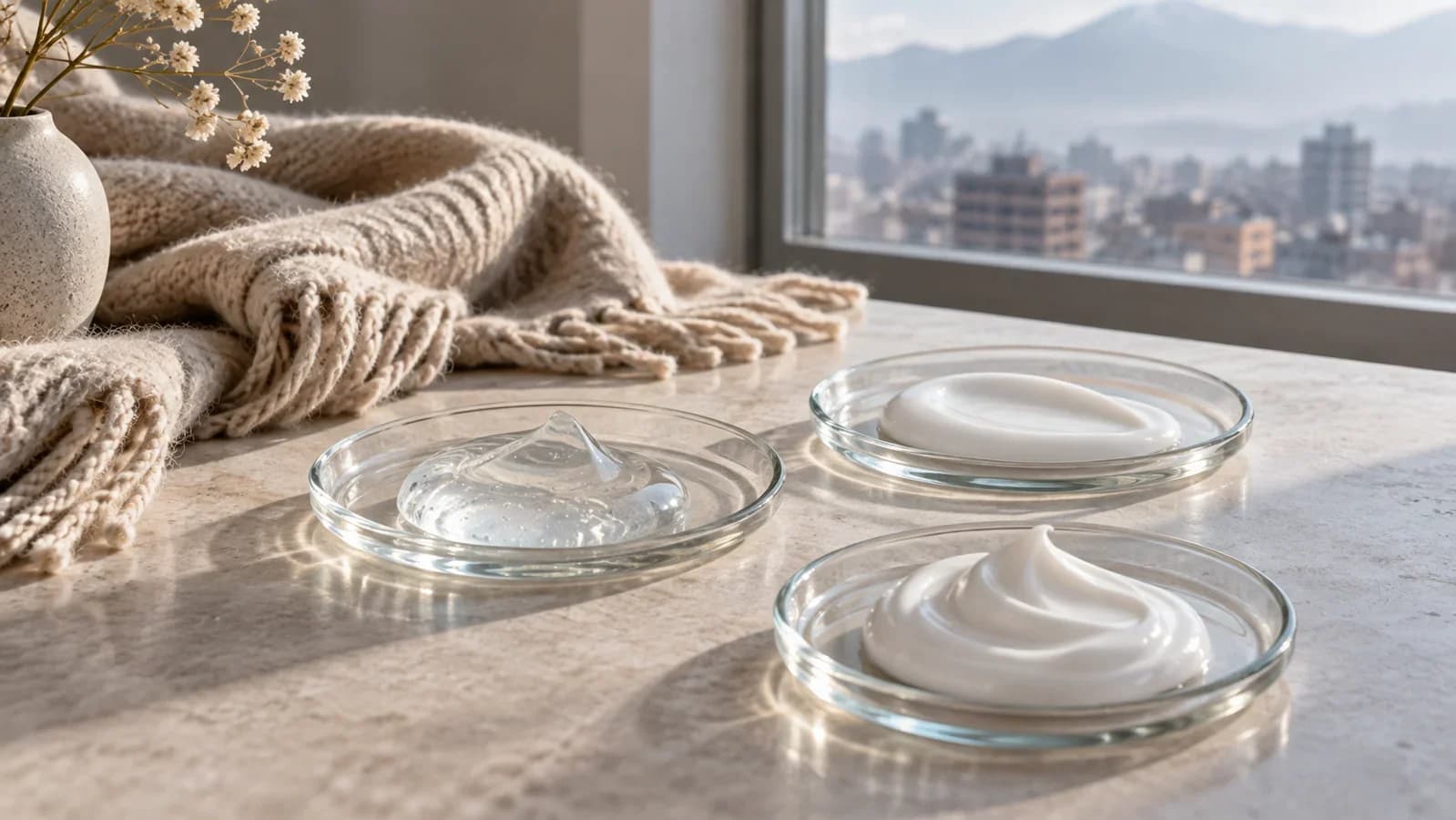
Choose a winter moisturizer by the problem it needs to solve in your routine. A gel often feels lighter; a lotion is generally more fluid; a cream is generally richer. Those words describe texture, not a guarantee of comfort or effectiveness for every formula. The American Academy of Dermatology (AAD) advises that creams and ointments can hold more moisture in very dry skin than lotions.[1] Check the actual product's purpose and ingredients, then notice how your skin feels after washing and later in the day.
You may feel tight after cleansing, yet dislike a heavy finish under sunscreen on a Kathmandu workday. Or your face may feel comfortable in the morning but rough by evening. Those are two different shopping questions. Start with the time and place discomfort appears, rather than choosing a jar because it has “winter” on the label.
Write down three observations for a few ordinary days: how your face feels immediately after cleansing, whether your current moisturizer feels comfortable, and whether the feeling changes before your evening wash. Note any recent change in cleanser, washing habit, weather exposure or routine. This is a useful record of what you experience, not a diagnostic test.
If tightness starts directly after washing, revisit the cleansing step as well as the moisturizer. The AAD recommends gentle washing with lukewarm water and avoiding scrubbing.[2] A richer cream cannot make aggressive cleansing a good habit. If your routine includes several exfoliating or treatment products, review their directions; do not add another active just because dryness has appeared.
If the moisturizer feels too heavy during a daytime commute, think about the whole morning sequence: moisturizer, sunscreen and any makeup. The comfortable choice may be a different amount or an appropriate lighter product used as directed, but do not reduce or skip sunscreen solely to make a cream fit. If the discomfort persists despite sensible routine changes, seek individual advice.
Texture word What to inspect Practical question Gel Usually lighter in feel, but formulas vary Do I need this texture for comfort, and does the full routine still feel adequate? Lotion Usually more fluid and easy to spread Does it remain comfortable until the next planned application? Cream Usually richer; AAD favors creams or ointments for overly dry skin Can I use it comfortably where and when I need it?
The categories are starting points. The AAD describes creams as thicker and generally more hydrating than lotions and gels, and recommends ointment or cream rather than lotion for very dry skin.[1][3] That general guidance does not rank every product on the Nepal market. Read the full label and directions, and choose a formulation that fits your preferences, routine and any advice from your dermatologist.
You can also use different textures at different times if their directions allow. Someone who dislikes a rich daytime finish may prefer to evaluate a richer moisturizer in the evening. That is a routine option, not a medical treatment plan or proof that overnight use is necessary for everyone.
The AAD recommends applying moisturizer while skin is still damp after washing to help trap existing moisture.[3] Place the product near your face-washing area so the step is easy to repeat. Use it as directed. Avoid a long series of experiments on the same day; if you change cleanser, serum and cream together, you will have a harder time understanding what changed the experience.
For a winter morning, keep the sequence simple enough to finish before leaving home. Cleanse gently if cleansing is part of your routine; moisturize as needed; then apply sunscreen according to its label. The AAD lists moisturizer and/or sunscreen before makeup in its general ordering advice.[4] A sunscreen with a lotion texture is still a sunscreen, not automatically a substitute for a dedicated moisturizer when your skin needs one.
If your face becomes uncomfortable later in the day, ask whether the original product was appropriate for you and whether the way you used it matched the label. Do not infer from one dry afternoon that your skin barrier is “damaged” or that you need a particular active molecule. “Barrier repair” is often used loosely in marketing; an individual condition needs proper assessment rather than a label-based diagnosis.
Choose one change you can observe. On day one, keep your current products and improve the technique you already know needs work, such as using lukewarm water or moisturizing after washing. On another comparable day, test a different moisturizer texture according to its directions while keeping the rest of the routine as stable as practical. Record comfort, finish and whether makeup or sunscreen layers behave as you expect.
This comparison will not tell you which formula is scientifically superior. Your days, exposures and application amounts differ. It may, however, show whether a particular routine is workable for you. Stop using a product that causes concerning discomfort and ask a qualified professional about persistent, worsening or unusual symptoms.
For customers buying online in Nepal, compare the current official product page and pack rather than a cropped advertisement. Confirm whether the item is a moisturizer, sunscreen or treatment; read the directions and precautions; and check whether the pictured size and formula match what you intend to buy. Those small checks prevent an attractive texture photograph from standing in for useful product information.
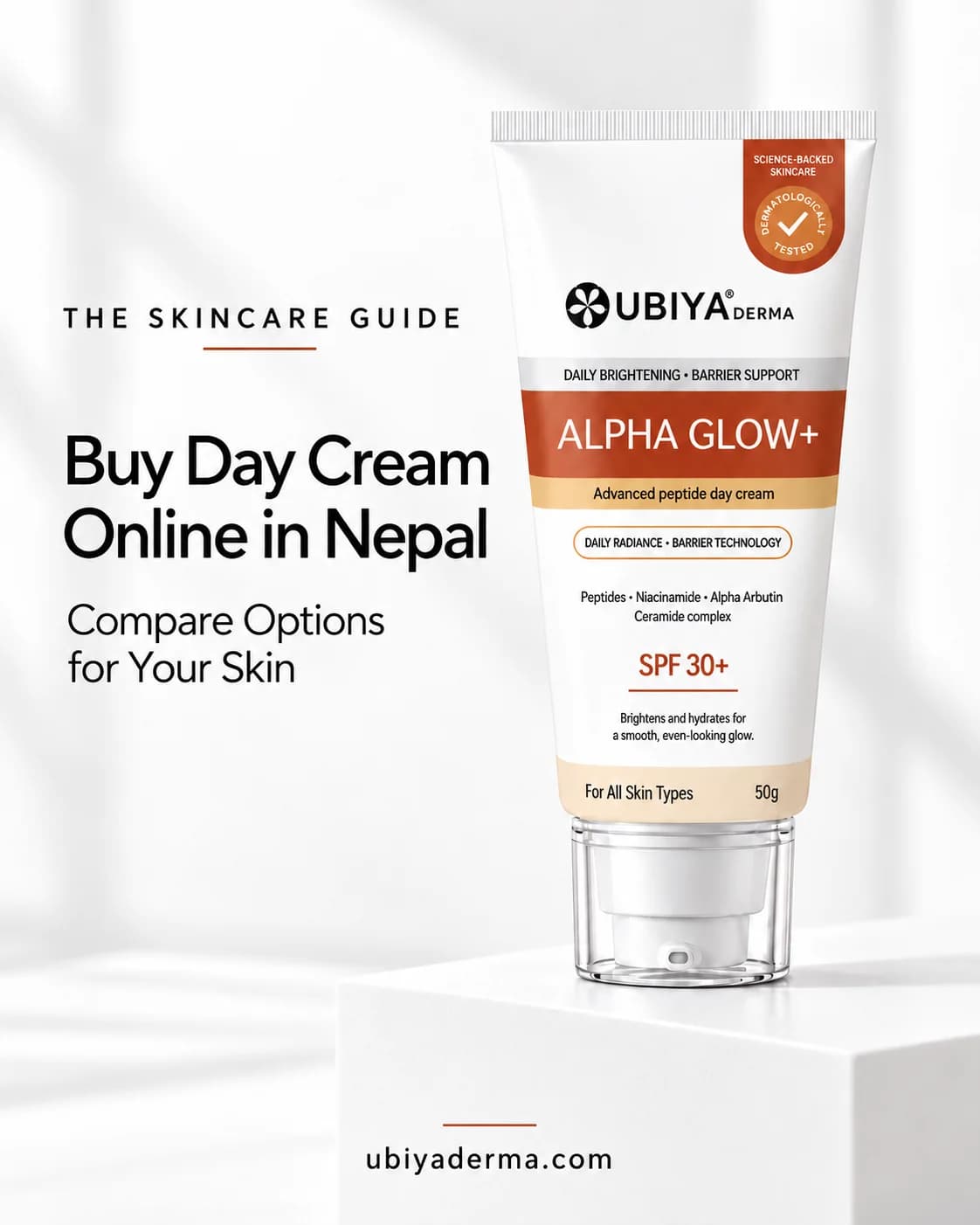
Ubiya Derma lists Alpha Glow+ Day Cream as a moisturizing day cream for dull, uneven-looking skin, with niacinamide, alpha arbutin and ceramides named on the current product page.[5] It is an optional example when you compare day-care products. Its listing is not evidence that it treats winter dryness, eczema or an impaired barrier in any particular person. Check the full current label before deciding whether it suits your routine.
Ubiya also lists a UV Defence Creamy Lotion Sunscreen.[6] Its texture word helps you anticipate feel, but its main purpose is sun care. Follow its specific application directions and current packaging; do not assume the amount needed for sunscreen is the same as the amount you would use for a regular moisturizer. The AAD's general sun-protection guidance recommends broad-spectrum, water-resistant SPF 30 or higher sunscreen and reapplication while outdoors as directed.[7]
No single texture label can answer that for every product or person. AAD guidance favors creams or ointments for overly dry skin, but your own comfort and the complete formula matter.[1][3] If a gel feels insufficient, inspect the routine rather than assuming every gel performs alike.
No. First check your washing technique and cleanser. The AAD recommends gentle cleansing and lukewarm water.[2] A cream may be worth considering for very dry skin, but persistent tightness or irritation deserves individual advice.
Some people may find a particular sunscreen comfortable on its own, while others need a separate moisturizer. Evaluate your needs and follow both products' directions. Do not treat the word “lotion” as proof that a sunscreen and a face moisturizer are interchangeable.
Begin with a clear problem and change one step at a time. A winter routine may need adjustment, but an entirely new shelf is not automatically necessary. Keep sun protection and any prescribed treatment directions in view.
Choose a texture you can use consistently, at the step where it belongs. If washing itself feels harsh, fix the habit first. If the product is uncomfortable under sunscreen, review the combined routine. If skin remains very dry, AAD guidance gives a reason to consider a cream or ointment, while persistent symptoms warrant individualized assessment. The best comparison is between real routines you can follow, not three texture words in isolation.
American Academy of Dermatology, How to pick the right moisturizer for your skin.
American Academy of Dermatology, Face washing 101.
American Academy of Dermatology, Dermatologists' top tips for relieving dry skin.
American Academy of Dermatology, Should I apply my skin care products in a certain order?.
Ubiya Derma, Alpha Glow+ Day Cream product page, accessed 2 November 2026.
Ubiya Derma, UV Defence Creamy Lotion Sunscreen product page, accessed 2 November 2026.
American Academy of Dermatology, How to decode a sunscreen label.