
Welcome to UBIYA DERMA
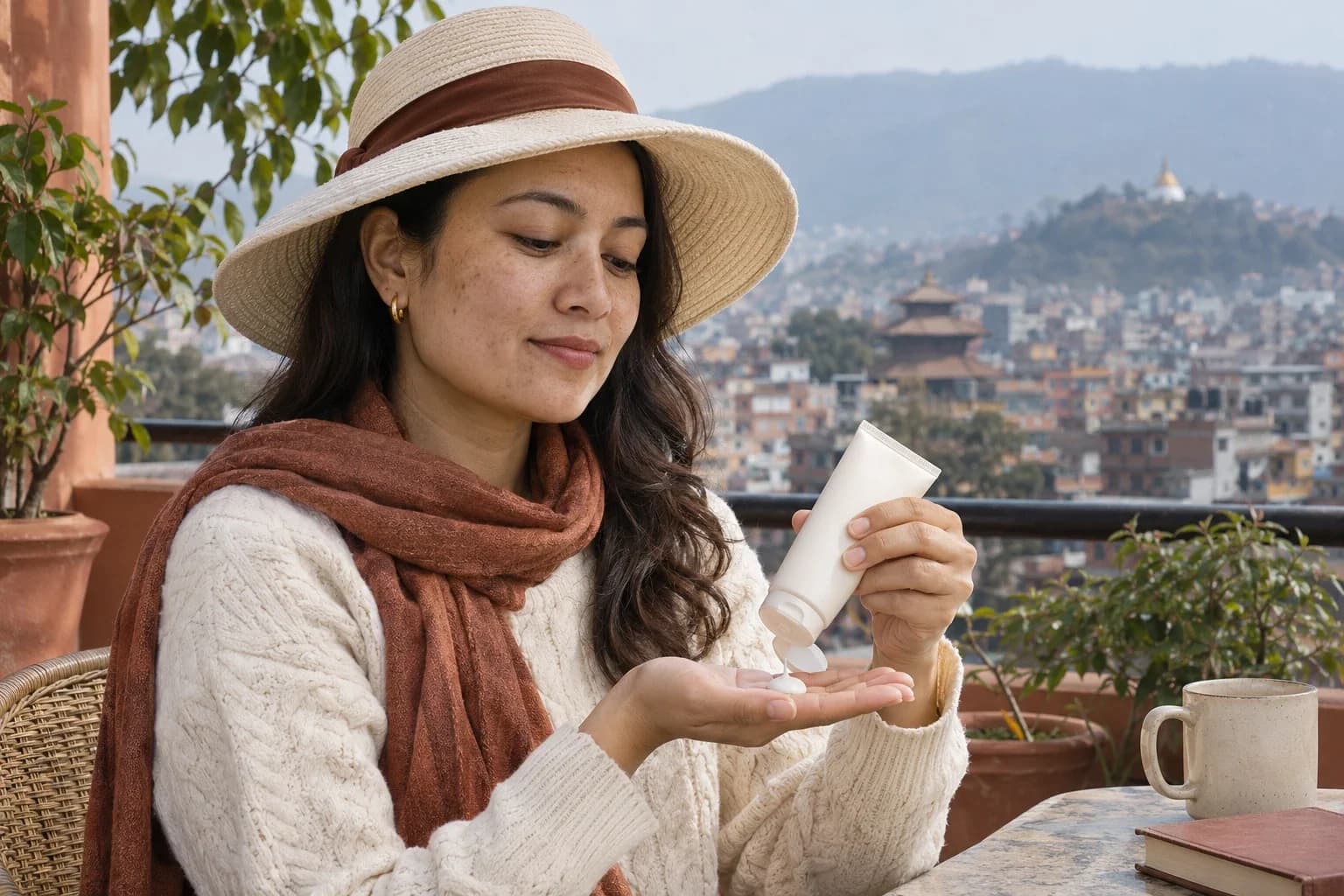
Make reapplication part of the workday before leaving home: carry your sunscreen, identify a clean place to use it, and plan around time outdoors, sweating and towel drying. An early morning application does not remove the need to follow directions later in the day.
For field staff, pharmacy visitors and people moving between meetings in Nepal, the main difficulty may be practical rather than a lack of information. The tube stays at home, hands are dusty, or the next appointment starts immediately. A useful plan solves those obstacles before the first outdoor journey.
Read the current container before building your timetable. Check application instructions, water-resistance information, warnings, expiry and storage guidance. Do not borrow directions from another sunscreen simply because both are gels or both have a high SPF.
The American Academy of Dermatology recommends a broad-spectrum, water-resistant sunscreen with SPF 30 or higher. Its general guidance includes applying before going outside, covering exposed areas and reapplying every two hours outdoors, with renewed application after swimming or sweating. Follow the label’s specific water-exposure directions as well. [1,2]
Higher SPF does not create an all-day exemption. A workday plan should therefore contain more than the note “sunscreen before breakfast.” It needs a way to check what happens between the first journey and the return trip.
A diary might show six indoor meetings, yet the gaps between them include walks, waiting outside and an outdoor lunch. Add those transitions to your plan. You do not need to pretend that every hour of the day creates identical exposure to notice where protection is inconvenient.
Try three columns in your phone: next outdoor period, place to reapply, and product available. This is a planning aid, not an exposure measurement or an SPF calculation. If the reapplication place is blank, you have found the part of the schedule to improve.
For example, an indoor break between two field visits may be a useful opportunity to check your sunscreen directions and prepare before heading outside again. The clock should support the instructions, not replace them.
Keep the kit simple enough that you will actually carry it:
Your current sunscreen in its original, clearly labeled container.
A hat and suitable covering clothing where practical.
A way to clean your hands before applying products to your face.
A small note of the product’s directions if the print is difficult to read.
Keeping the original container makes the variant, expiry and instructions easier to check. If you use several sunscreens at home, decide which one is coming with you instead of discovering an unfamiliar tube in the bag during a rushed break.
Store it according to its label. FDA guidance advises protecting sunscreen from excessive heat and direct sun. Avoid leaving the day’s tube on a hot vehicle dashboard or in direct sunlight while you work. [3]
At a suitable break, ask: Have I been outdoors? Have I sweated or towel dried? What does this product say to do next? Can I apply it properly here, or do I need a cleaner and more private place?
An ordinary phone reminder can help you notice the checkpoint, but it cannot verify that sunscreen was applied adequately. Mark the action only after you have done it. If the reminder sounds during a meeting, move it to the next workable break rather than dismissing it and assuming the step happened.
Do not shorten the process into a token dab solely to satisfy the reminder. Use the amount and technique in the product instructions. Cover the relevant exposed areas rather than repeating only the easiest part of the face.
AAD application guidance highlights skin that clothing does not cover, including ears and neck. Hands can also be relevant during outdoor work. Review the areas actually exposed by your clothes rather than assuming that a face application covers the whole task. [1]
A scarf, helmet or mask may change which areas are uncovered, but it does not make every remaining area protected. A short mirror check can help you notice gaps around the ears, hairline and neckline. This is a coverage check, not a guarantee that no UV reaches the skin.
If the day involves heat, exertion or sport, read water-resistance directions in advance. Under the US labeling system, tested durations are expressed as 40 or 80 minutes of swimming or sweating. Those are conditions of a claim, not a promise of waterproof protection. [2]
Toweling matters too: follow the label’s instructions after drying. Do not assume a morning water-resistant application remains unchanged after repeated wiping. Having the tube accessible is more useful than having a higher-SPF product that cannot be reapplied when needed.
Choose a clean place and a method you can use consistently with your sunscreen’s directions. Do not assume a light cosmetic mist or powder recreates the amount or coverage of your sunscreen. If your usual makeup makes reapplication impractical, treat that as a routine-design problem to work through before a long outdoor day.
You may want a simpler makeup routine for field visits, but there is no single technique in this article that guarantees preserved makeup and verified protection. Test comfort and usability separately from protection claims.
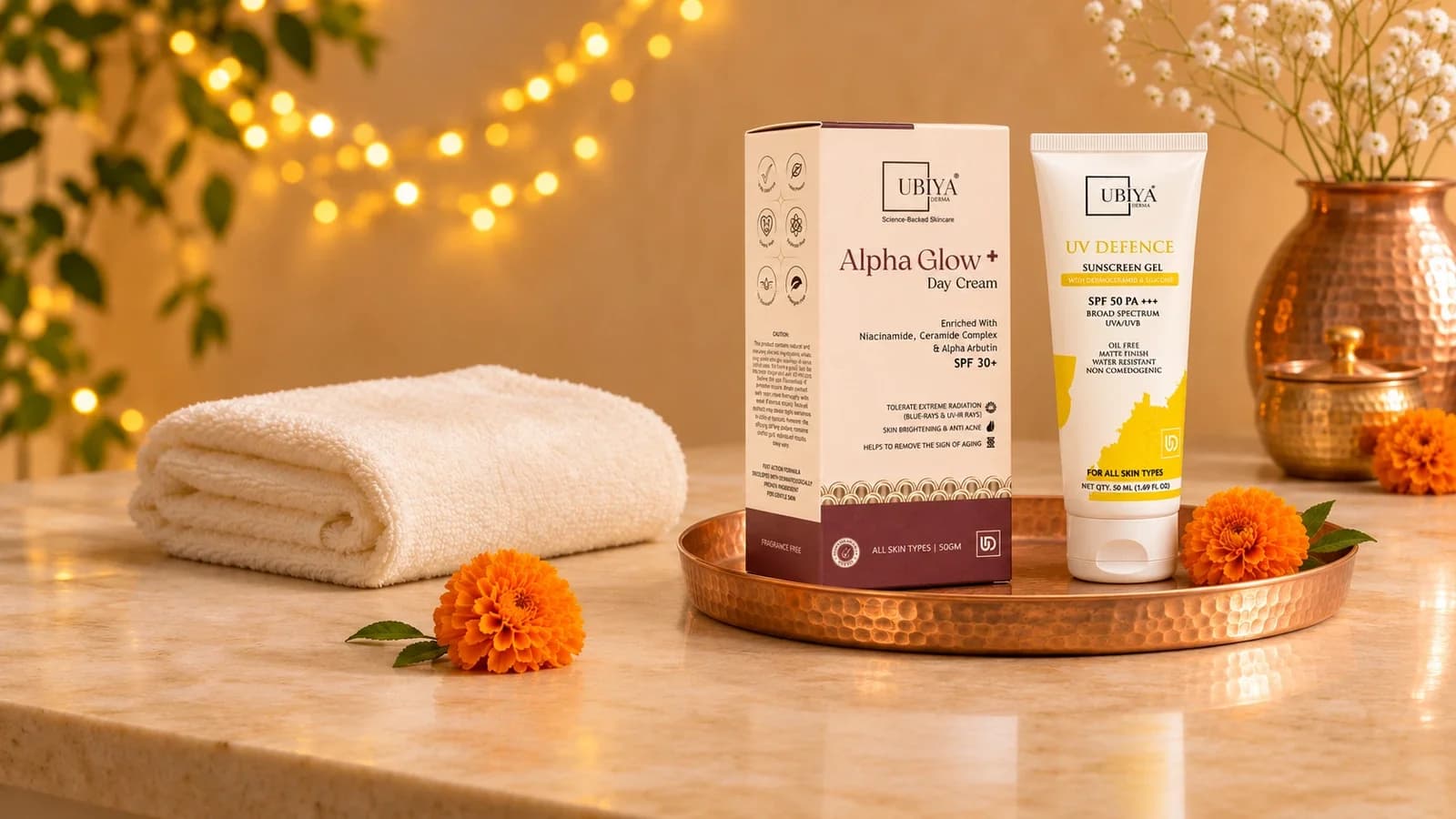
Ubiya lists a UV Defence Sunscreen Gel and a UV Defence Creamy Lotion Sunscreen. These are variant examples, not verified comparative protection results. Check the actual pack and approved instructions before choosing for a sweaty day. [4,5]
This draft does not assign a water-resistance duration or resolve product-specific PA claims. Ask the brand when information is inconsistent. A comfortable finish can support routine adherence, but it is not a substitute for confirmed labeling.
Winter does not remove outdoor sun exposure. Build the plan around your activities and the product’s directions rather than warmth alone. [1]
No. It is an organizational tool. Sweating, swimming or towel drying may require action according to the label before a routine reminder occurs. [2]
No. Use complementary protective measures. Plan the day so that sunscreen is one practical part of protection rather than the only measure available. [2,3]
AAD, application guidance: https://www.aad.org/public/everyday-care/sun-protection/shade-clothing-sunscreen/how-to-apply-sunscreen
FDA, sunscreen directions and labeling: https://www.fda.gov/drugs/understanding-over-counter-medicines/questions-and-answers-fda-announces-new-requirements-over-counter-otc-sunscreen-products-marketed-us
FDA, sun safety and storage: https://www.fda.gov/consumers/consumer-updates/tips-stay-safe-sun-sunscreen-sunglasses
Ubiya gel page, linked above; accessed 15 November 2026.
Ubiya lotion page, linked above; accessed 15 November 2026.
Rajendra Koirala, BSc (Chemistry), MBA; Founder & Managing Director, Ubiya Derma; Cosmeceutical Formulation & Product Development Specialist; Author, Ubiya Derma Skincare Blog.
Rajendra Koirala brings 20 years of pharmaceutical industry experience to Ubiya Derma’s product development. He writes practical, research-informed skincare articles for readers in Nepal.