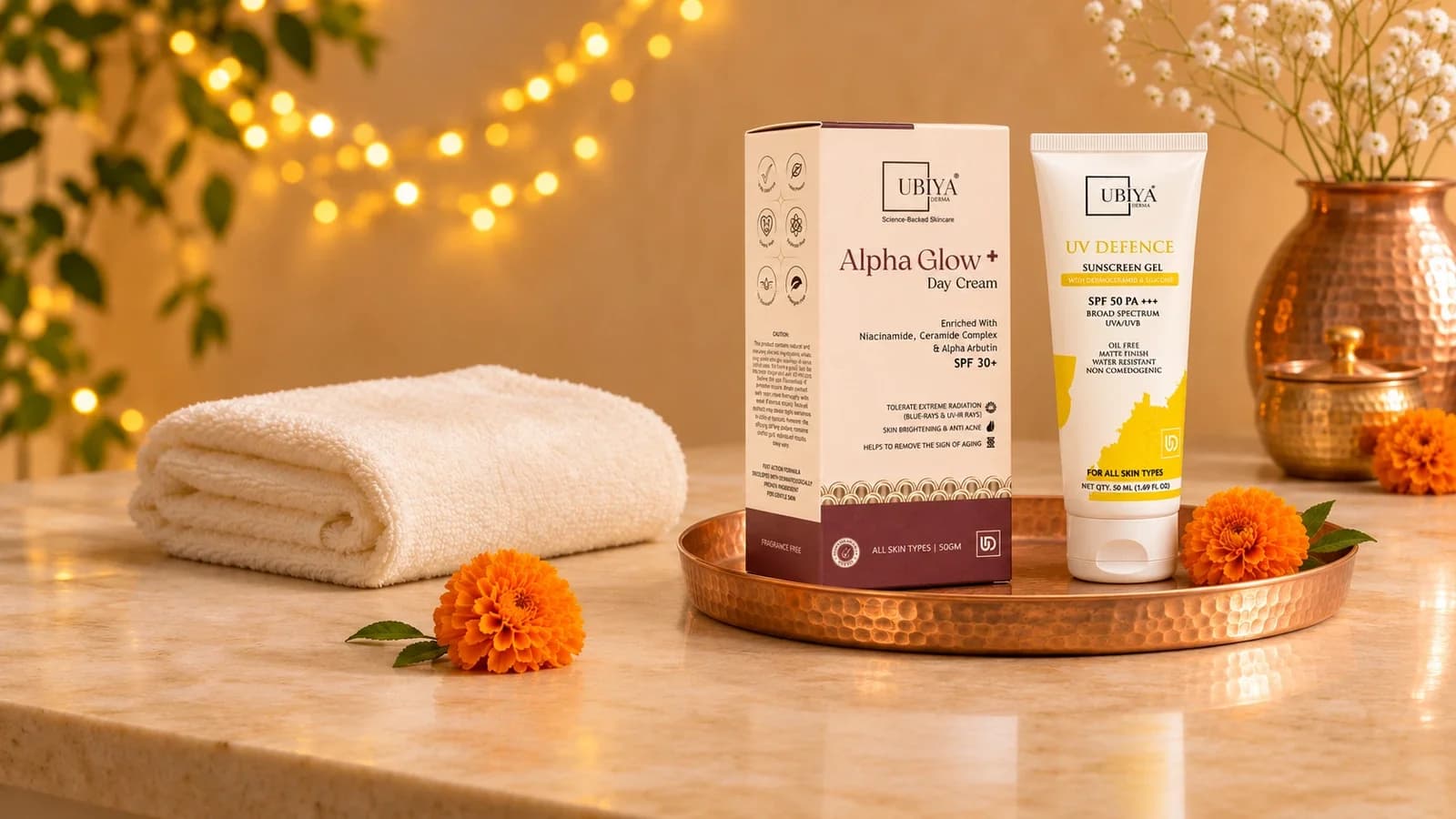

Welcome to UBIYA DERMA

By Rajendra Koirala, BSc (Chemistry), MBA — Founder & Managing Director, Ubiya Derma; Cosmeceutical Formulation & Product Development Specialist.
About the author: Rajendra Koirala brings 20 years of pharmaceutical industry experience to Ubiya Derma’s product development. He writes practical, research-informed skincare articles for readers in Nepal.
Prepared for Ubiya Derma. Editorial update: 8 November 2026. General skincare education; not medically reviewed.
If your skin feels uncomfortable after a long, very hot shower, begin with the bathing routine. The American Academy of Dermatology (AAD) advises limiting baths and showers to about five to ten minutes, using warm rather than hot water, patting skin dry and applying moisturizer while it is still damp.[1] Make these changes before assuming you need a stronger serum or a new set of products.
A hot shower can feel especially welcome on a chilly Nepal morning. The practical question is what happens afterward: do your arms or legs feel tight, do you rub with a towel, and how long before you moisturize? Those observations point to habits you can change without diagnosing a skin condition. The earlier Ubiya article on tightness after face washing focuses on the face and cleanser. This guide covers the bathing sequence and body-care decisions.
Think back to your last ordinary shower. Was the water comfortably warm or noticeably hot? Did you stay in because the room felt cold? Did you use a strong soap everywhere, scrub with a rough tool, then rub dry? Each detail can matter. The AAD identifies long hot showers as a cause of dryness and recommends a short warm bath or shower for dry skin.[1][2]
Write down what you actually do for two or three days. No special device or skin score is needed. Record approximate time, whether the water felt hot, what cleanser you used, how you dried off and whether moisturizer was within reach. The point is to locate an easy first change. It is not a clinical test and cannot identify the cause of persistent itching, cracking or a rash.
Shorten: Aim for a brief wash rather than lingering under running water. AAD guidance for dry skin suggests around five to ten minutes.[1]
Warm: Choose warm water instead of very hot water. Adjust the tap before beginning, especially during a cold morning.[1]
Pat: After rinsing, gently pat with a clean towel. Avoid rubbing skin until it feels completely dry.[1]
Moisturize: Apply an appropriate moisturizer while skin is still damp. Keep it where you can reach it immediately after bathing.[1]
This sequence is more actionable than buying a cream first and continuing the same long, hot shower. Try the habits consistently enough to assess comfort; do not interpret one better day as proof of a cure. If your symptoms are persistent, worsening or unusual, consult a qualified professional.
The AAD advises choosing a gentle cleanser for dry skin and avoiding thick lather from using too much. It suggests applying cleanser where it is needed rather than automatically covering every area with a harsh soap.[1] Follow your product's directions and your own hygiene needs. This is a general bathing principle, not a reason to skip cleaning areas that need it.
A pleasant scent, a large amount of foam or a “squeaky” finish is not proof that a wash suits dry-feeling skin. Compare product purpose and label directions. If a wash appears to leave you uncomfortable, record that observation and check the current pack. Avoid layering a scrub onto already uncomfortable skin simply to make it feel smoother.
The face may need its own gentle technique. AAD face-washing guidance recommends lukewarm water, fingertips rather than scrubbing tools and gentle drying.[3] If your main concern is facial tightness, the earlier face-washing guide offers a more focused audit; this article helps you assess the full shower and body-care sequence.
Many people own a moisturizer but do not use it promptly after bathing. Place the product near the clean towel so the step does not depend on remembering it after getting dressed. The AAD advises applying moisturizer while skin is still damp. For overly dry skin, it favors a cream or ointment over a lotion and recommends fragrance-free options.[1]
Read the exact product directions. A face cream, a body moisturizer and a sunscreen may all have a creamy texture but different intended uses. Avoid assuming a sunscreen is a substitute for the amount and timing of moisturizer you need after a shower. If you will go outdoors, use appropriate sun protection according to its own label; the AAD recommends broad-spectrum, water-resistant SPF 30 or higher as general guidance.[1]
Use the same short note each day: shower length, water feel, cleanser, drying method, moisturizer and how your skin feels later. Change the obvious habit first; if you replace the cleanser, towel, cream and shower length together, the record becomes less informative. Seasonal routines vary between homes and people, so your goal is a comfortable, repeatable sequence rather than a universal promise.
Do not call every dry feeling “barrier damage.” The phrase is common online but cannot diagnose an individual condition. Significant cracking, bleeding, a persistent rash or severe discomfort deserves professional advice. The AAD specifically recommends dermatologist input when self-care is insufficient or dry skin remains concerning.[1]
No. The AAD recommends short showers with warm water for dry skin.[1] The useful change is to avoid prolonged very hot water while maintaining a comfortable wash.
That conclusion does not follow from one shower. Check water temperature, duration, cleanser, towel friction and when you apply moisturizer. If the product itself causes discomfort or dryness continues, seek individual advice rather than assuming a particular cause.
Do not respond by scrubbing harder. AAD guidance favors gentle cleansing and patting dry for dry skin; facial cleansing guidance advises against scrubbing.[1][3] If flaking or irritation persists, a dermatologist can assess it.
Set the water to warm, keep the wash brief, cleanse gently, pat dry and moisturize while skin is still damp. These are small habits you can repeat without building a complicated routine. Track what changes, and take persistent or severe concerns to a qualified professional rather than adding stronger cosmetic products at random.
American Academy of Dermatology, Dermatologists' top tips for relieving dry skin.
American Academy of Dermatology, Dry skin: Who gets and causes.
American Academy of Dermatology, Face washing 101.
Ubiya Derma, Why Does Skin Feel Tight After Washing in Winter?, public article checked 8 November 2026.