
Welcome to UBIYA DERMA
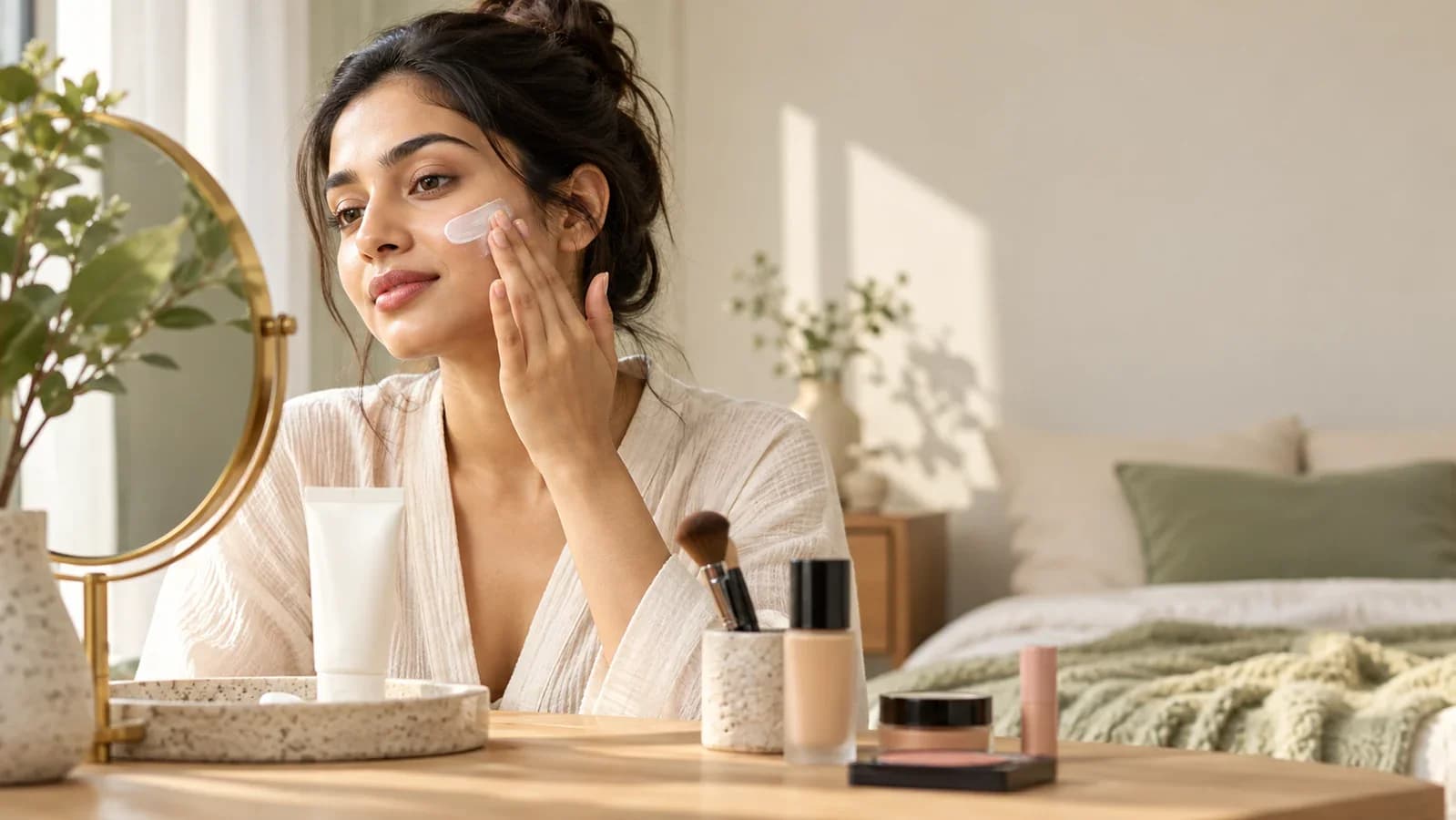
If sunscreen forms little rolls or flakes when you apply makeup, check where the rolling starts before replacing everything. The interaction can involve the base product, sunscreen, foundation and the way each layer is applied. A published study found that different base formulations produced different pilling results when paired with sunscreen; it does not establish a universal waiting time or prove that one texture never pills.[1] Keep sunscreen as its own properly applied step, then change one variable at a time.
Perhaps you are getting ready for an office day in Kathmandu, and the result looks fine until you blend foundation over your cheeks. That is a specific problem with a testable sequence. It is more useful to locate the troublesome combination than to buy another product because a social post called it “makeup friendly.”
Try the routine on a day when you have time to observe it. After cleansing, apply only the products you normally need. Look at the finish after your moisturizer, after sunscreen, and again after makeup. If visible rolls appear before foundation, examine the skincare and sunscreen combination. If the rolls begin only when foundation is blended, review that last application step and the specific pairing.
Use the same products and amounts you would ordinarily use. A test with an unusually tiny amount of sunscreen may seem smooth but tells you little about your real sun-care routine. Do not deliberately underapply sunscreen just to make makeup look better. The American Academy of Dermatology (AAD) gives specific application and reapplication guidance; check your product's current label as well.[2]
The 2024 pilling study examined controlled combinations and application conditions. Its findings support testing the complete routine, not diagnosing an individual's skin type from a few flakes.[1] Keep a short note of the combination that produced the problem; a phone photo can help you compare the next attempt without relying on memory.
The AAD describes an everyday order of cleansing, any prescribed treatment as directed, moisturizer and/or sunscreen, then makeup.[3] Your own product labels and any clinician's instructions still matter. If your morning involves a toner, two serums, a day cream, sunscreen, primer and foundation, remove optional steps one at a time to see whether the troublesome interaction disappears. This is a troubleshooting exercise, not a rule that more products are always bad.
Apply each product according to its instructions and give yourself enough time to work without immediately rubbing the next layer across the same area. There is no research-backed universal “wait exactly five minutes” solution for every formula. If the sequence remains difficult after you simplify it, test another compatible combination while keeping adequate sunscreen application.
Do not blend sunscreen into foundation as a shortcut. The protection on a sunscreen label is based on the sunscreen used as directed, and the AAD recommends applying it to uncovered skin in an adequate amount.[2] Makeup belongs after the sun-care step. If makeup disrupts a visible area of the sunscreen layer, redo that area thoughtfully rather than assuming the original application remains intact.
Notice what your hands, sponge or brush actually do. Repeatedly rubbing over the same spot can move layers around; the study specifically investigated application method as a possible factor.[1] Try placing makeup in small sections and blending gently instead of buffing one cheek for a long time. Keep the technique consistent when comparing two routines, or you will not know which change helped.
Consider where pilling occurs. Is it along the jaw after blending, near the nose where you go back with a brush, or across the whole face before makeup? The location may help you choose the next variable to test. It is an observation, not proof of the cause or a clinical diagnosis.
If the finish already looks uneven, do not solve the cosmetic problem by piling on more foundation over loose material. Remove the disrupted product in that small area and reapply the steps as directed. For extensive rolling, starting the affected routine again may be more sensible than repeatedly rubbing it. Follow your sunscreen label for application timing before outdoor exposure.
What you notice First variable to test What to keep in mind Rolls appear before makeup Omit one optional base layer Keep sunscreen at the directed amount. Rolls appear only during foundation Use a gentler blending motion or test that pairing Change one thing per attempt. Rolls appear where you repeatedly buff Reduce friction over that area Do not mistake a smoother look for measured SPF. You feel you must use less sunscreen Reconsider the product pairing Cosmetic finish should not drive underapplication. The issue continues across combinations Record products and seek individual advice if needed Persistent irritation or a skin concern needs a qualified professional.
This table is a practical way to isolate an everyday cosmetic issue. It does not measure protection. The AAD recommends broad-spectrum, water-resistant SPF 30 or higher sunscreen and says to reapply approximately every two hours while outdoors, or after swimming or sweating, according to the label.[2] Plan for that real-world reapplication, including on days you wear makeup; a flawless morning finish is not a substitute for it.
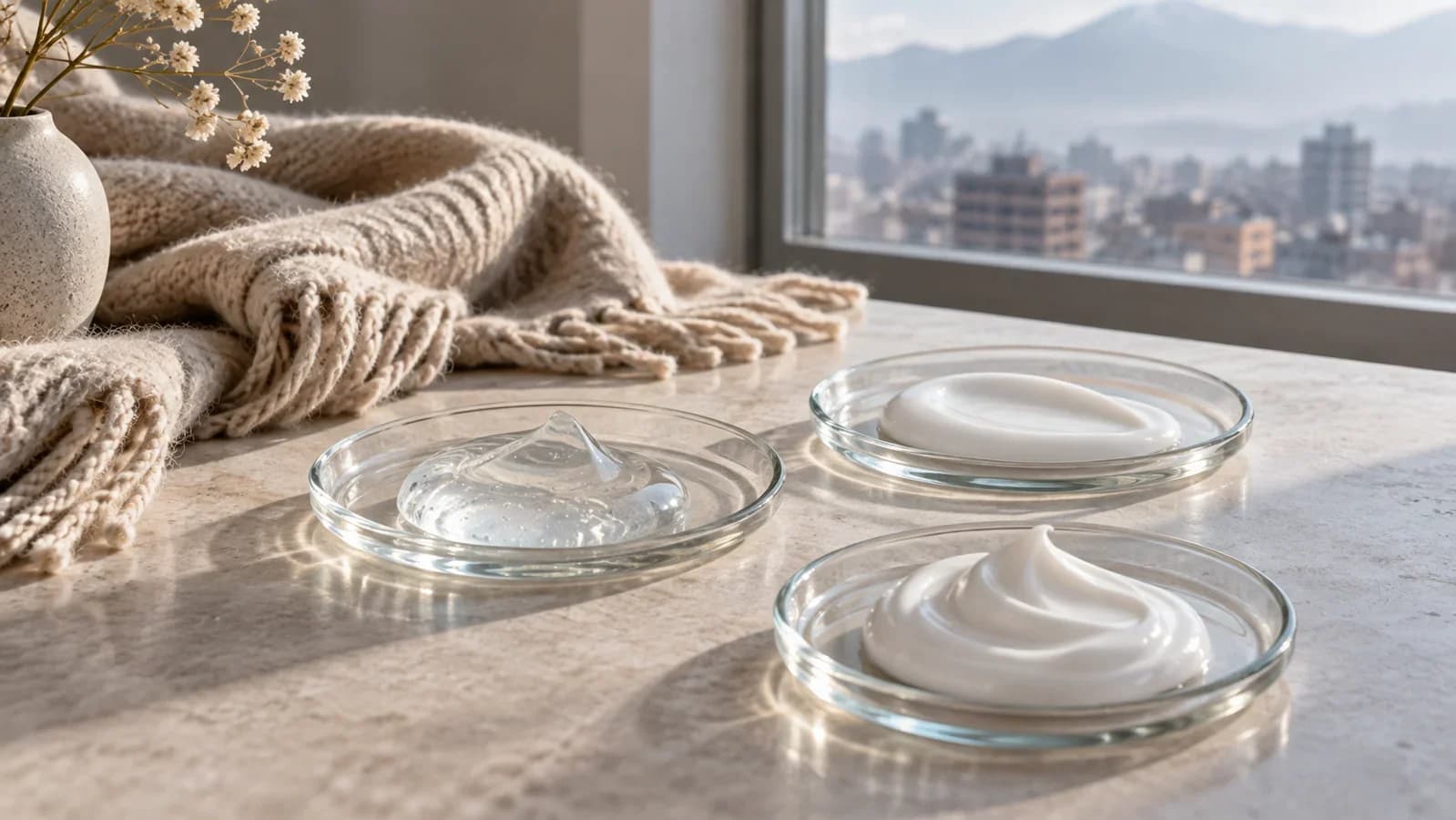
“Gel” and “lotion” describe useful feel differences, but the full formula and its interaction with your other products determine how a particular combination behaves. Ubiya Derma currently lists a UV Defence Silicone Matte Sunscreen Gel with a matte texture, and a UV Defence Creamy Lotion Sunscreen with a creamy lotion texture.[4][5] Compare the current official pages and packaging for directions, suitability and protection details. Neither listing proves that a product will never pill with your foundation.
Do not treat a marketing phrase such as “under makeup” as evidence of compatibility with every primer and base. Test the actual combination you intend to wear. If you are choosing between textures, let application directions and comfort guide your shortlist, then check the final layered routine rather than assuming a category predicts the outcome.
Pilling by itself is not a laboratory SPF test. It does show that product is moving or rolling on the surface, so you should not assume that a visibly disturbed area has ideal coverage. Follow the label and restore the affected application instead of relying on appearance alone. The study examined pilling behavior, not the SPF of an individual person's disrupted routine.[1]
It depends on your own skin needs and the product directions. The AAD's general routine allows moisturizer and/or sunscreen before makeup.[3] If you need a separate moisturizer, try removing another optional layer or changing the pairing first. Do not make a persistent feeling of discomfort the price of a smoother foundation finish.
There is no single interval demonstrated to solve every formula combination. Follow the sunscreen label, allow a comfortable application sequence and test one change at a time. If you go outdoors, pay attention to the product's instructions about application before exposure and later reapplication.[2]
No. Matte describes a finish, not universal compatibility. A specific moisturizer, sunscreen, foundation and technique may behave differently together. The pilling study found differences across base formulations, so compare your actual routine.[1]
The aim is a morning routine that is comfortable, wearable and consistent with the sunscreen's directions. Find the layer where rolling begins, simplify optional steps, change your blending motion and keep the sunscreen amount and outdoor reapplication in view. That is a more useful next step than treating one makeup mishap as proof you need an entirely new skincare shelf.
Lua S and colleagues, “Understanding the causes of skincare product pilling,” Skin Research and Technology (2024). Full research article.
American Academy of Dermatology, How to apply sunscreen and How to decode a sunscreen label.
American Academy of Dermatology, Should I apply my skin care products in a certain order?.
Ubiya Derma, UV Defence Silicone Matte Sunscreen Gel product page, accessed 2 November 2026.
Ubiya Derma, UV Defence Creamy Lotion Sunscreen product page, accessed 2 November 2026.